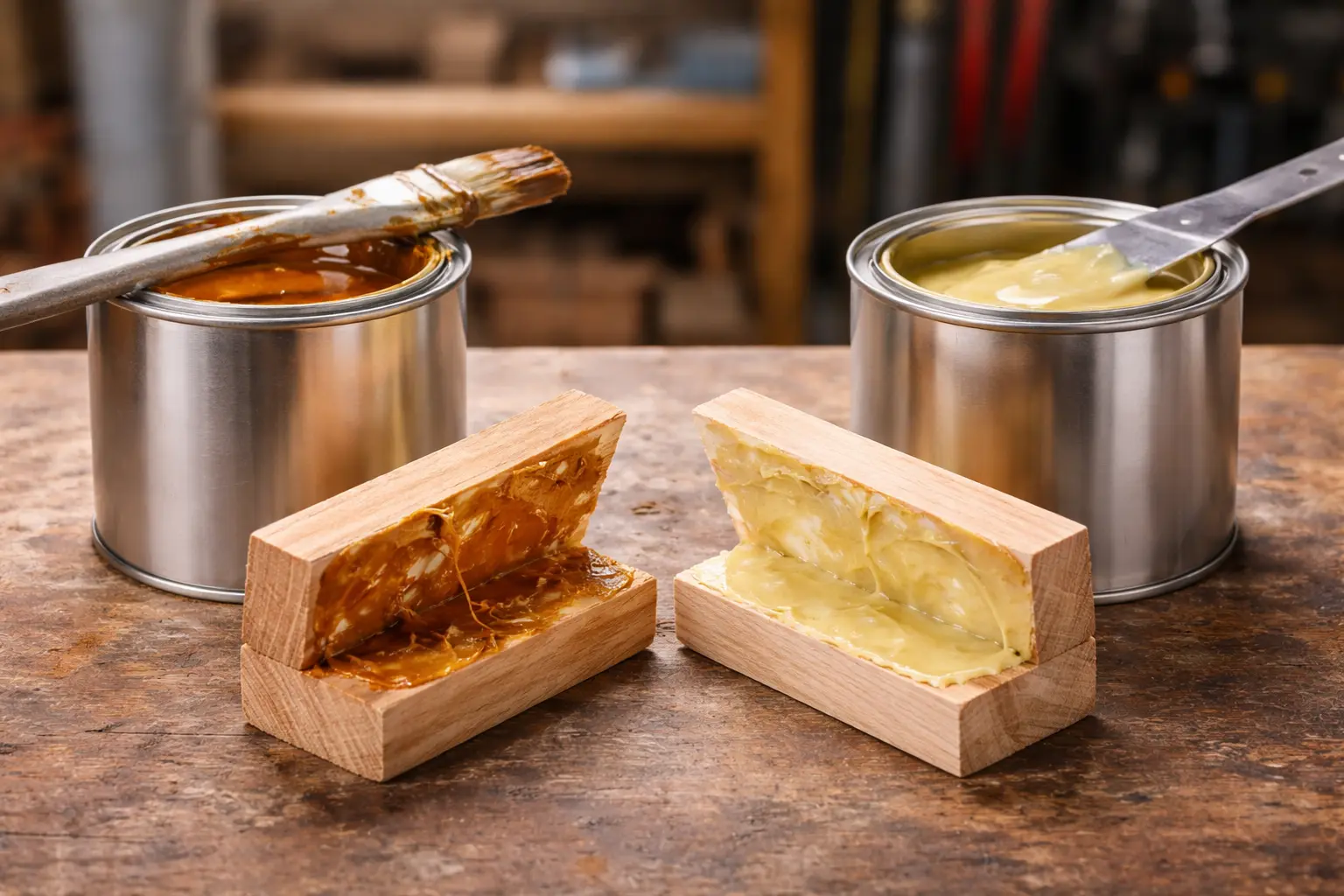
Neoprene vs SBS Contact Adhesive: Complete Comparison Guide
A detailed comparison of neoprene (CR) and SBS contact adhesives — covering bond strength, heat resistance, cost, and ideal applications for industrial buyers.
Read More →Technical Guide
For industrial buyers sourcing adhesives from China, the choice between solvent-based and water-based formulations is one of the most consequential decisions in the procurement process. It affects bond performance, production line speed, regulatory compliance, worker safety, and total cost of ownership. The answer is rarely straightforward — it depends on your target market's regulations, your factory's infrastructure, and the substrates you are bonding.
This guide breaks down the technical differences between solvent-based and water-based adhesives with real performance data, so you can make an informed sourcing decision. We cover chemistry fundamentals, a side-by-side comparison table, industry-specific recommendations, and practical guidance for factories considering a transition.
Solvent-based adhesives use organic solvents — typically toluene, acetone, ethyl acetate, or hexane — as the carrier for the adhesive polymer. The polymer (commonly neoprene/chloroprene rubber or SBS thermoplastic rubber) is dissolved in the solvent. When applied, the solvent evaporates rapidly, leaving behind a strong adhesive film that bonds on contact.
Water-based adhesives (also called waterborne or aqueous adhesives) use water as the primary carrier. The adhesive polymer — typically an acrylic emulsion, polyurethane dispersion (PUD), or vinyl acetate-ethylene (VAE) copolymer — is suspended as fine particles in water. As the water evaporates (or is absorbed by porous substrates), the polymer particles coalesce to form a continuous adhesive film.
The following table summarizes the key performance and compliance differences between solvent-based and water-based contact adhesives for industrial applications.
| Property | Solvent-Based | Water-Based |
|---|---|---|
| Bond Strength (Peel) | 3-8 N/mm | 2-6 N/mm |
| Drying / Open Time | 5-15 minutes | 20-45 minutes |
| VOC Content | 400-700 g/L | Less than 50 g/L |
| Heat Resistance | Up to 120 degrees C (neoprene) | 60-80 degrees C |
| Substrate Range | Porous + non-porous | Best on porous substrates |
| Approximate Cost/kg | Lower per-kg | Higher per-kg (lower total cost in regulated markets) |
| Humidity Sensitivity | Low | High (above 70% RH slows drying) |
| Regulatory Compliance | Restricted in EU, US, Japan, Australia | Compliant in most markets |
| Shelf Life | 12-18 months | 6-12 months (freeze-sensitive) |
Choosing between solvent-based and water-based adhesive is not a universal decision. It depends on four primary factors specific to your operation and target market.
If you export finished goods to the EU, North America, Japan, or Australia, your products may need to meet strict VOC limits. EU REACH regulations, for example, restrict several solvents commonly used in contact adhesives. Markets in Southeast Asia, Africa, the Middle East, and Latin America generally have fewer restrictions, making solvent-based adhesives a viable option. Check the specific regulatory requirements and certifications for your destination market before committing to a formulation type.
Factories operating in tropical climates (relative humidity consistently above 70%) will experience significantly slower drying times with water-based adhesives. This can reduce production throughput by 30-50% unless the facility invests in heated drying tunnels or dehumidification systems. Solvent-based adhesives are far less affected by ambient humidity and maintain consistent drying times year-round.
Water-based adhesives perform well on porous substrates — wood, MDF, fabric, paper, and natural leather. For non-porous substrates like metal, PVC, ABS plastic, or synthetic rubber, solvent-based adhesives generally provide superior bond strength without the need for primers or surface activation. If your production involves mixed substrates, a dual-system approach (water-based for porous, solvent-based for non-porous) may be optimal.
High-volume production lines that depend on fast cycle times — such as footwear sole bonding at 800-1200 pairs per shift — may find the longer open time of water-based adhesives a bottleneck. Solvent-based adhesives allow pressing within 5-15 minutes of application. Water-based adhesives require 20-45 minutes, unless accelerated with IR heating or hot air tunnels.
Furniture manufacturing primarily involves bonding porous materials — wood, MDF, plywood, fabric, and foam. Water-based adhesives are well-suited for these substrates and are increasingly preferred by furniture exporters supplying EU and North American retailers. For HPL (high-pressure laminate) bonding to countertops where heat resistance is critical, neoprene solvent-based contact adhesive remains the standard. Budget-conscious manufacturers in domestic or regional markets can use SBS-based solvent adhesives as a cost-effective alternative for general lamination.
Footwear adhesive selection depends heavily on the bonding stage. Sole-to-upper bonding demands the highest bond strength and heat resistance — neoprene or PU solvent-based adhesives are the industry standard for this step. Upper assembly, lining attachment, and insole bonding are less demanding and can often use water-based alternatives. Major brand manufacturers (Nike, Adidas suppliers) are under pressure to transition to water-based systems, driving investment in drying infrastructure. Smaller factories producing for price-sensitive markets typically continue with solvent-based adhesives.
Construction applications — flooring installation, wall panel bonding, insulation attachment — span both indoor and outdoor environments. Indoor applications increasingly require low-VOC products due to building codes and green building certifications (LEED, BREEAM). Water-based contact adhesives and water-based PVA formulations work well for interior woodwork and flooring. Outdoor and structural applications, where moisture resistance and temperature cycling are factors, favor solvent-based or hybrid reactive adhesives.
For factories considering a transition from solvent-based to water-based adhesives, a phased approach reduces risk and minimizes production disruption. Here is a practical roadmap based on our experience supporting manufacturers through this process.
Not every factory needs to go fully water-based. A hybrid approach — using water-based adhesives where feasible and solvent-based where necessary — is a practical strategy that balances performance, compliance, and cost. Our technical team can help you evaluate which contact adhesive products fit each stage of your production process.
A detailed comparison of neoprene (CR) and SBS contact adhesives — covering bond strength, heat resistance, cost, and ideal applications for industrial buyers.
Read More →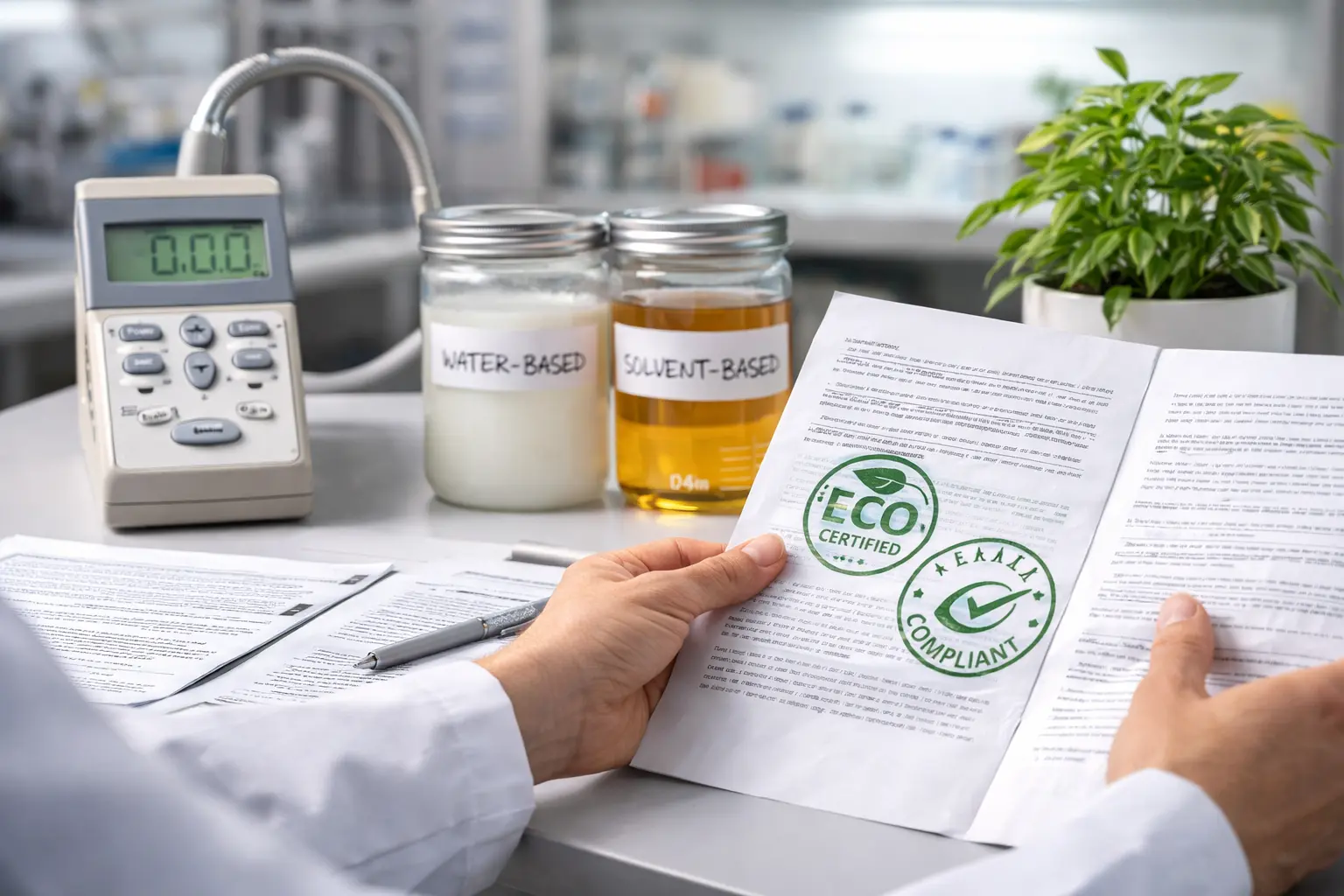
Navigate VOC regulations and find the right low VOC contact adhesive for your market. Covering EU REACH, US EPA standards, and practical sourcing advice.
Read More →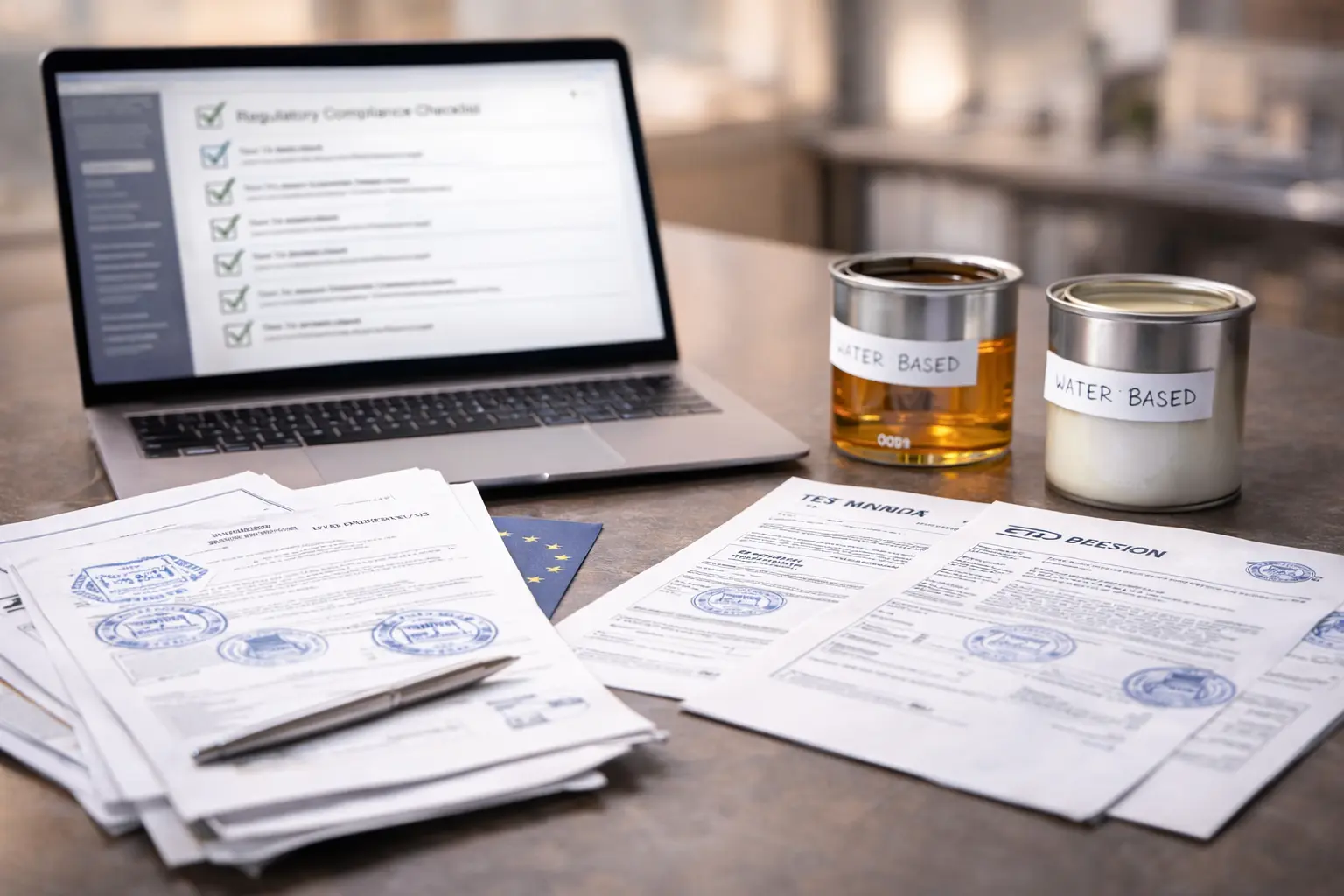
A practical guide to REACH compliance for adhesive importers — what the regulation covers, how to verify supplier compliance, and which documents to request.
Read More →Whether you need solvent-based performance or water-based compliance, our team can help you find the optimal solution.