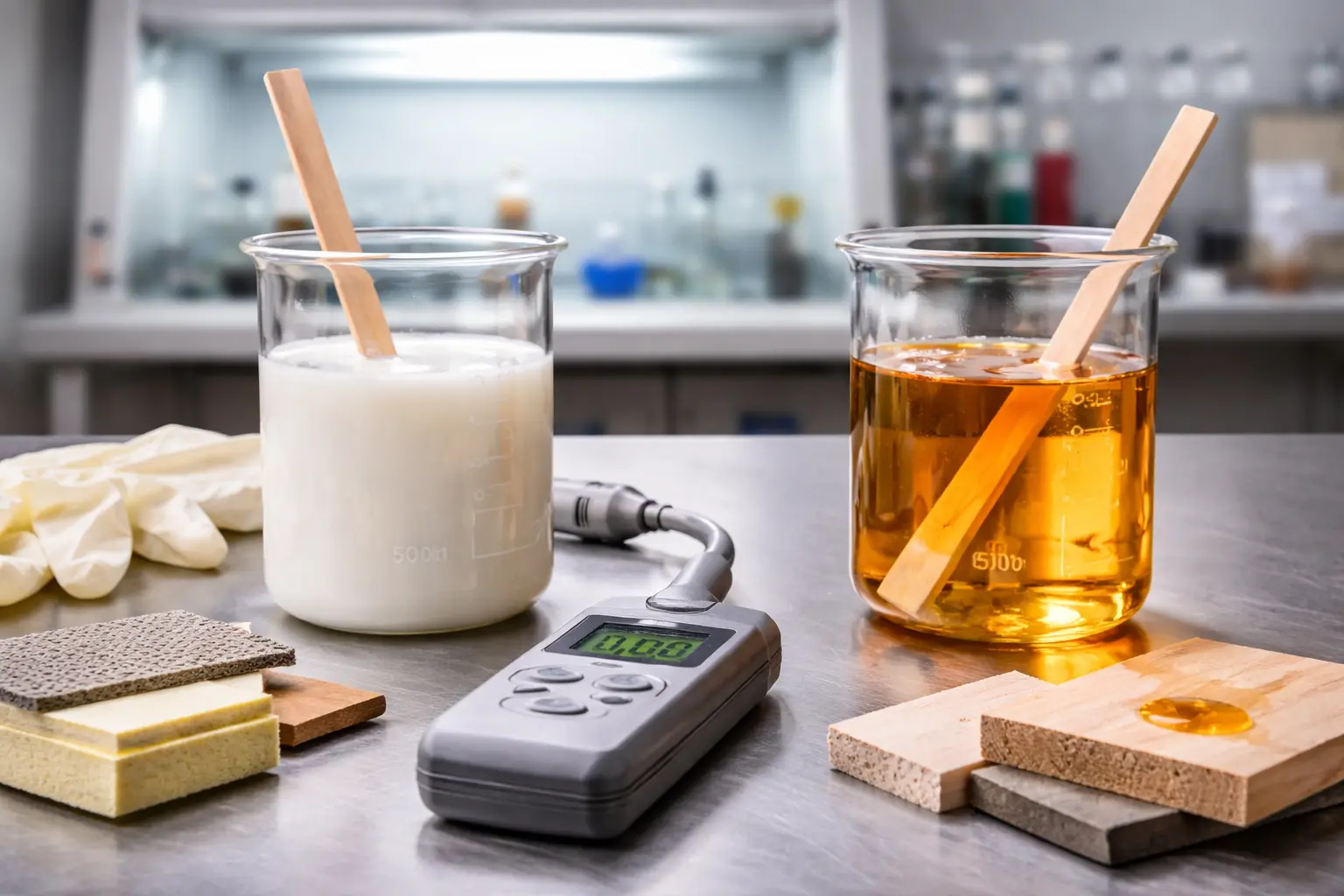
Solvent-Based vs Water-Based Adhesive: How to Choose
Understand the key differences between solvent-based and water-based adhesives — performance, VOC levels, drying time, and regulatory compliance for industrial use.
Read More →Technical Guide
Contact adhesives are among the most widely used bonding solutions in industrial manufacturing. From furniture factories laminating HPL panels to shoe manufacturers assembling uppers, contact adhesives deliver instant bond strength on contact — no clamping required. But not all contact adhesives are the same, and choosing the wrong base polymer can lead to bond failures, higher costs, or regulatory issues.
The two dominant types in the market are neoprene (CR) contact adhesive and SBS contact adhesive. Each is built on a different synthetic rubber, and each has distinct strengths. This guide breaks down the technical differences, performance characteristics, and cost considerations so that procurement managers and engineers can make an informed decision for their specific production needs.
Neoprene contact adhesive is based on polychloroprene rubber (CR), a synthetic elastomer developed in the 1930s and still considered the benchmark for high-performance contact bonding. The polymer is dissolved in a solvent blend (typically toluene-free formulations for export markets) along with tackifying resins, metal oxide curing agents, and antioxidants.
Neoprene has been the industry standard for decades, particularly in applications where heat resistance and long-term durability are non-negotiable — footwear sole bonding, automotive interior trim, and high-end furniture lamination.
SBS contact adhesive uses styrene-butadiene-styrene block copolymer as its base rubber. SBS is a thermoplastic elastomer — it softens when heated and re-solidifies on cooling, unlike neoprene which undergoes chemical crosslinking. SBS adhesives are formulated with compatible tackifying resins (typically C5 hydrocarbon resins) dissolved in solvent blends.
SBS adhesives have gained significant market share in Southeast Asia, Africa, and South America — particularly in furniture manufacturing and general construction — where their lower cost aligns with budget-conscious procurement and heat resistance is not a critical requirement.
The following table summarizes the key differences between neoprene (CR) and SBS contact adhesives across the most important performance parameters for industrial buyers.
| Property | Neoprene (CR) | SBS |
|---|---|---|
| Base Polymer | Polychloroprene (CR) | Styrene-Butadiene-Styrene |
| Bond Strength (Peel) | 3.0 - 5.0 N/mm | 2.0 - 4.0 N/mm |
| Heat Resistance | Up to 120°C continuous | 60 - 80°C (softening point) |
| Chemical Resistance | Excellent (oils, greases, solvents) | Moderate (limited solvent resistance) |
| Open Time | 5 - 20 minutes | 3 - 15 minutes |
| Drying Speed | Moderate | Fast (15-30% faster) |
| Cost (per kg) | Higher (baseline) | 20-40% lower |
| Typical Applications | Footwear, automotive, high-end furniture, heat-exposed surfaces | General furniture, insulation, packaging, decorative lamination |
As the table illustrates, neoprene outperforms SBS in heat resistance, chemical resistance, and ultimate bond strength. SBS wins on cost and drying speed. The right choice depends entirely on the application requirements and operating environment.
Neoprene contact adhesive is the right choice when bond failure is not an option, or when the bonded assembly will be exposed to elevated temperatures or harsh chemical environments. Specific scenarios include:
SBS contact adhesive is the practical choice for cost-sensitive applications where the bonded joint will not face extreme heat or chemical exposure. It is the faster, more affordable option for high-volume production lines. Consider SBS for:
Yes — and many factories do. A dual-adhesive strategy allows you to optimize cost without compromising quality where it matters. The approach is straightforward:
For factories looking to reduce VOC emissions across both adhesive types, water-based contact adhesives are also worth evaluating. Water-based formulations eliminate flammable solvents entirely and can meet increasingly strict environmental regulations in export markets. Visit our contact adhesive product range to explore all available options.
Understand the key differences between solvent-based and water-based adhesives — performance, VOC levels, drying time, and regulatory compliance for industrial use.
Read More →
Step-by-step instructions for applying contact adhesive in industrial settings — surface preparation, application methods, drying time, and troubleshooting weak bonds.
Read More →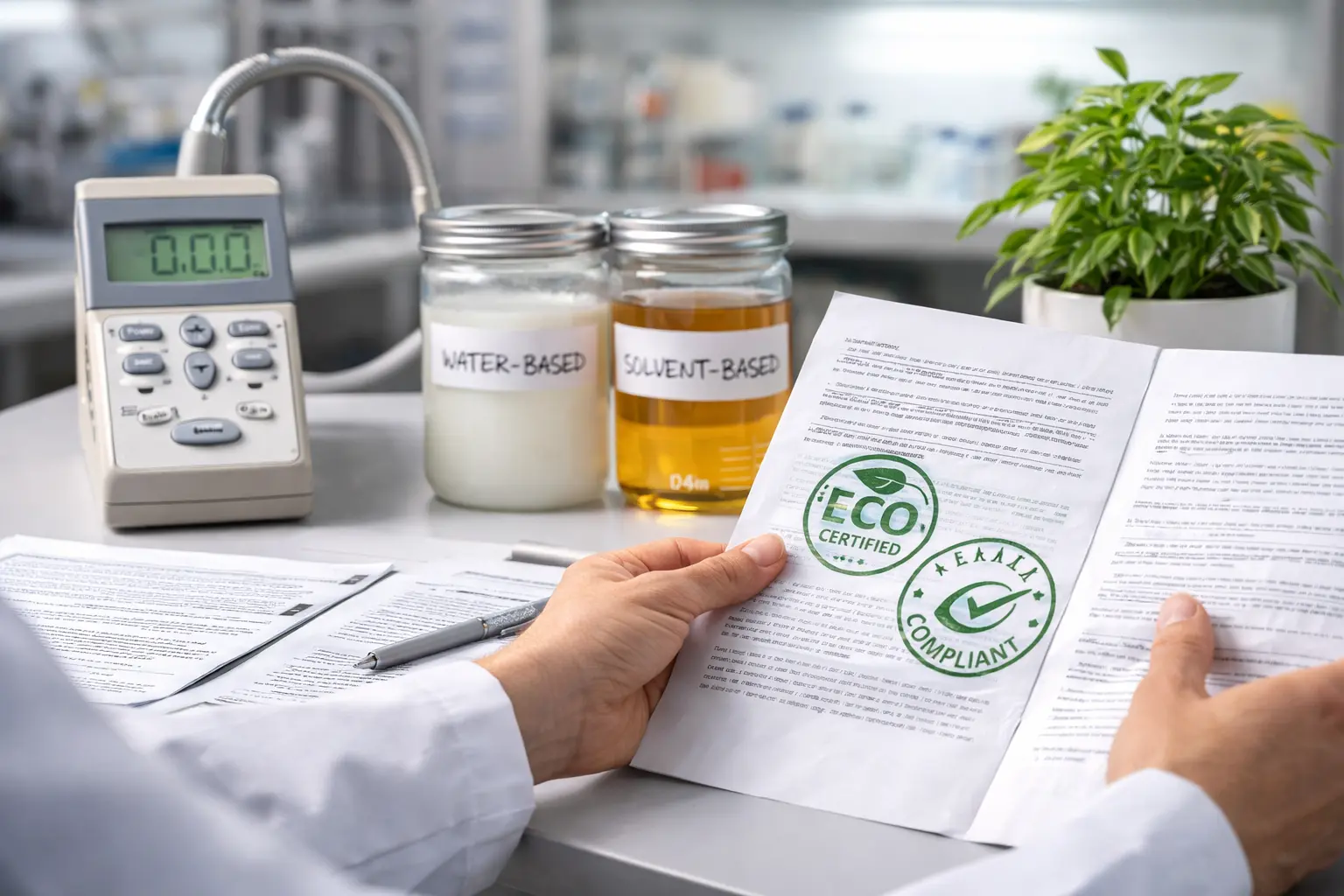
Navigate VOC regulations and find the right low VOC contact adhesive for your market. Covering EU REACH, US EPA standards, and practical sourcing advice.
Read More →Our technical team can recommend the best formulation for your specific application. Get expert advice and free samples.