
Neoprene vs SBS Contact Adhesive: Complete Comparison Guide
A detailed comparison of neoprene (CR) and SBS contact adhesives — covering bond strength, heat resistance, cost, and ideal applications for industrial buyers.
Read More →Technical Guide
Heat is one of the most common causes of adhesive bond failure in industrial environments. From automotive interiors baking under tropical sun to kitchen countertops near stoves, bonded assemblies are routinely exposed to temperatures that exceed the limits of standard adhesives. When a bond softens, delaminates, or creeps under heat, the result is product failure, warranty claims, and lost credibility with end customers.
Selecting the right heat resistant adhesive is therefore a critical engineering decision, not just a procurement one. This guide covers the temperature ratings of major adhesive types used in industrial manufacturing, the factors that affect heat performance, and practical recommendations for common high-temperature applications. Whether you are bonding headliners in an automotive plant or laminating surfaces near heating systems in construction projects, the information here will help you specify the correct product.
Heat resistance in adhesives is not a single number. It is defined by several parameters, and misunderstanding them is a common source of specification errors. Before comparing adhesive types, it is essential to understand the terminology.
The continuous service temperature is the maximum temperature at which an adhesive maintains its rated bond strength over an extended period (typically thousands of hours). This is the number that matters for most industrial applications. The peak temperature (or short-term exposure temperature) is higher but only valid for brief exposures, usually minutes to hours. Specifying based on peak temperature alone leads to premature bond failure.
For thermoplastic adhesives like SBS contact adhesive, the softening point is the temperature at which the polymer begins to flow and lose structural integrity. This is distinct from decomposition temperature. An SBS adhesive with a softening point of 70°C will not burn at that temperature, but the bond will creep under load and eventually fail. Thermoset adhesives (epoxy, crosslinked neoprene) do not have a traditional softening point because their polymer chains are chemically crosslinked.
The following table compares the heat resistance of the major adhesive types used in industrial manufacturing. Ratings represent typical commercial formulations; specialized grades may differ.
| Adhesive Type | Continuous Temp | Peak Temp | Flexibility | Typical Use |
|---|---|---|---|---|
| SBS Contact Adhesive | 60 - 80°C | 90°C | High | General furniture, insulation, indoor lamination |
| Neoprene (CR) Contact Adhesive | 100 - 120°C | 150°C | Moderate | Footwear, automotive, kitchen furniture, industrial |
| PU (Polyurethane) Adhesive | 80 - 120°C | 150°C | Moderate to High | Shoe sole bonding, composite panels, structural |
| Epoxy Adhesive | 150 - 250°C | 300°C | Low (rigid) | Metal bonding, electronics, aerospace, structural |
| Silicone Adhesive/Sealant | 200 - 300°C | 350°C | High | Gaskets, oven seals, HVAC, expansion joints |
| Ceramic Adhesive | 500 - 1000°C+ | 1600°C+ | None (brittle) | Kiln linings, exhaust systems, furnace repair |
For the majority of industrial bonding applications in furniture, footwear, and construction, the relevant range is 60-150°C. This places contact adhesives (SBS and neoprene) and PU adhesives as the primary options. Applications above 200°C typically fall outside the scope of contact adhesives and require silicone, epoxy, or inorganic adhesive systems.
The temperature rating on a technical data sheet (TDS) represents laboratory performance under controlled conditions. In real-world applications, several factors can reduce effective heat resistance.
Not all neoprene adhesives are equal. The grade of polychloroprene resin, the curing agent system (metal oxide type and loading), and tackifier selection all influence heat resistance. Economy-grade neoprene adhesives using lower-cost resin blends may only achieve 80-90°C continuous rating versus 120°C for premium formulations. Always request independent test data, not just manufacturer claims.
Metal substrates conduct heat directly to the bond line faster than wood or plastic substrates. An adhesive bonding aluminum panels near a heat source will reach elevated temperatures more quickly than the same adhesive bonding MDF. The effective thermal exposure at the bond line, not just the ambient temperature, determines whether the adhesive will hold.
Heat resistance drops significantly under sustained load. A neoprene adhesive rated to 120°C may hold a zero-load joint at that temperature but fail at 90°C under continuous peel stress. Joints designed in shear (surfaces sliding against each other) perform better at elevated temperatures than joints in peel (edges being pulled apart), because shear distributes stress across a larger bonded area.
Heat resistance degrades over time, especially when combined with UV exposure, moisture cycling, or chemical contact. An adhesive that withstands 120°C when freshly cured may only tolerate 100°C after 5 years of weathering. For long-life applications (building facades, automotive components), factor in a temperature safety margin of at least 20-30°C below the rated maximum.
Vehicle interiors in tropical markets (Southeast Asia, Middle East, Africa) can reach 80-110°C under direct sunlight with windows closed. SBS adhesives will fail in this environment. The standard specification for automotive interior bonding is neoprene contact adhesive with a minimum 100°C continuous service rating. For headliner substrates bonded to metal roof panels, consider neoprene spray adhesive for uniform coverage and fast application on large surface areas.
Countertops adjacent to stoves and ovens experience localized temperatures of 60-90°C. Steam from cooking and hot water exposure adds moisture stress to the bond. Neoprene contact adhesive is the minimum specification for kitchen laminate bonding. For countertops that directly abut cooktops, a two-part PU adhesive provides an additional margin of safety with heat resistance up to 120°C and superior moisture resistance.
In construction applications, adhesive bonds near radiators, hot water pipes, underfloor heating systems, and chimney surrounds are routinely exposed to 50-80°C. Standard SBS contact adhesive may suffice for radiator panel bonding where temperatures stay below 60°C, but neoprene is recommended as a safety margin. For direct contact with hot pipes (insulation jacketing on steam lines), silicone sealant rated to 250°C is the appropriate choice.
Bonding gaskets, vibration dampening pads, protective linings, and insulation on industrial equipment often involves continuous heat exposure above 100°C. For rubber-to-metal bonding on machinery operating at 80-120°C, neoprene adhesive provides reliable performance. For applications above 150°C (exhaust ducting, kiln surrounds, motor housings), silicone adhesives or high-temperature epoxies are required. In furnace and refractory applications above 500°C, ceramic adhesives are the only viable option.
Standard laboratory testing involves bonding test specimens (typically metal or rigid substrate coupons) with the adhesive, allowing full cure, then placing the bonded assembly in an oven at the specified test temperature. After conditioning (hours to days depending on the standard), specimens are tested for lap shear strength (ASTM D1002), peel strength (ASTM D903), or creep resistance (ASTM D4498). Results are reported as retention of bond strength at temperature compared to room-temperature baseline.
For factories without laboratory equipment, practical field evaluation is straightforward. Bond two test pieces of your actual production substrates with the candidate adhesive. After full cure (24-72 hours depending on adhesive type), place the bonded sample in an oven at 10-20°C above your expected maximum service temperature. Hold for 4-8 hours. Remove and test the bond by hand or with a simple peel test. If the bond delaminates, creeps, or shows significant softening, the adhesive is not suitable for your application. Run this test on at least three specimens to account for variability.
The selection process follows a logical sequence based on your application requirements. Work through these decision points in order:
Beyond temperature, also consider whether the joint requires flexibility (silicone excels), chemical resistance (neoprene and epoxy excel), or gap-filling capability (PU and silicone excel). In most industrial manufacturing contexts where heat resistance is needed but the service temperature stays below 120°C, neoprene contact adhesive remains the most practical, cost-effective, and widely proven solution.
A detailed comparison of neoprene (CR) and SBS contact adhesives — covering bond strength, heat resistance, cost, and ideal applications for industrial buyers.
Read More →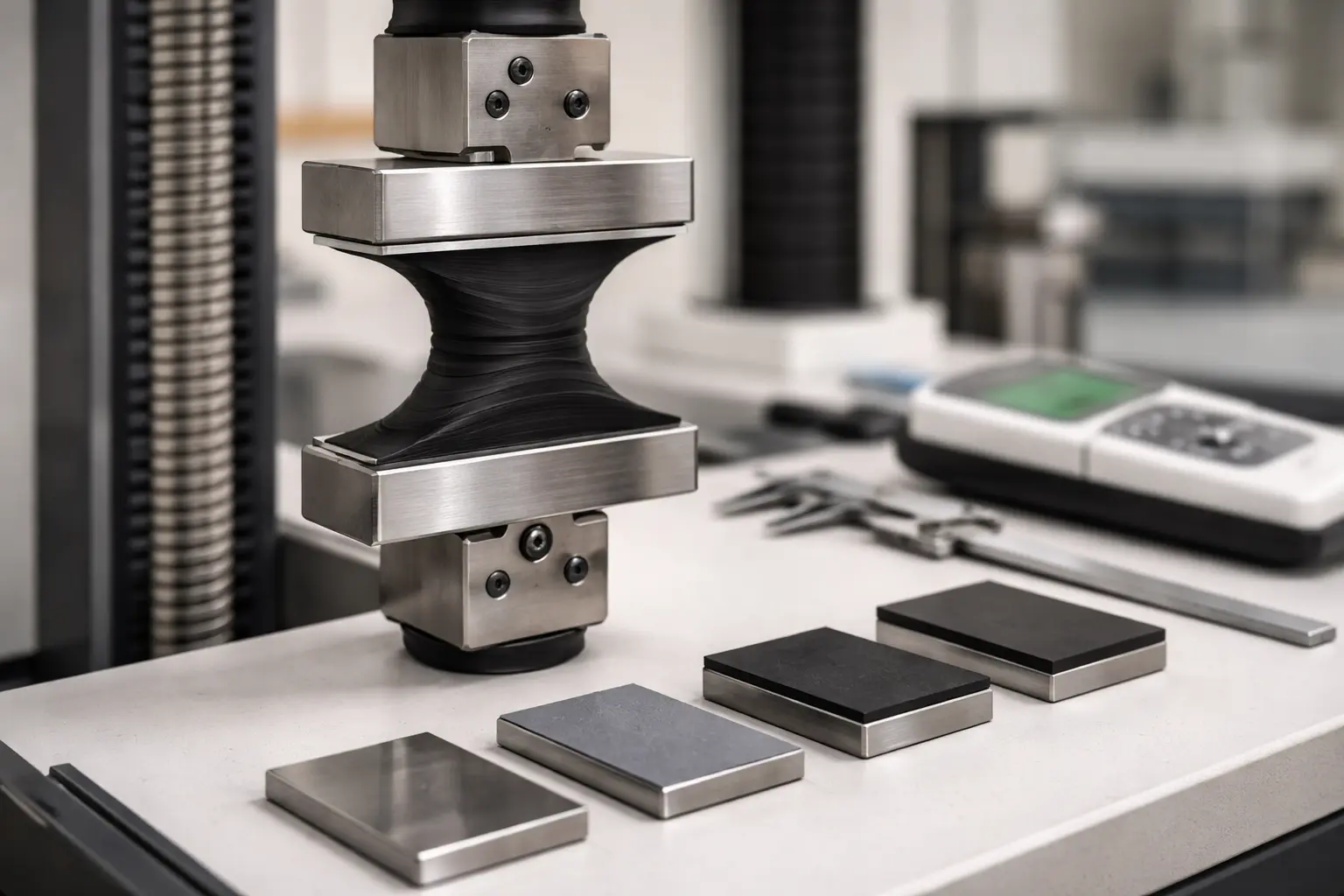
How to bond rubber to metal in industrial applications — adhesive types, surface treatment, bonding process, and quality testing for durable rubber-metal assemblies.
Read More →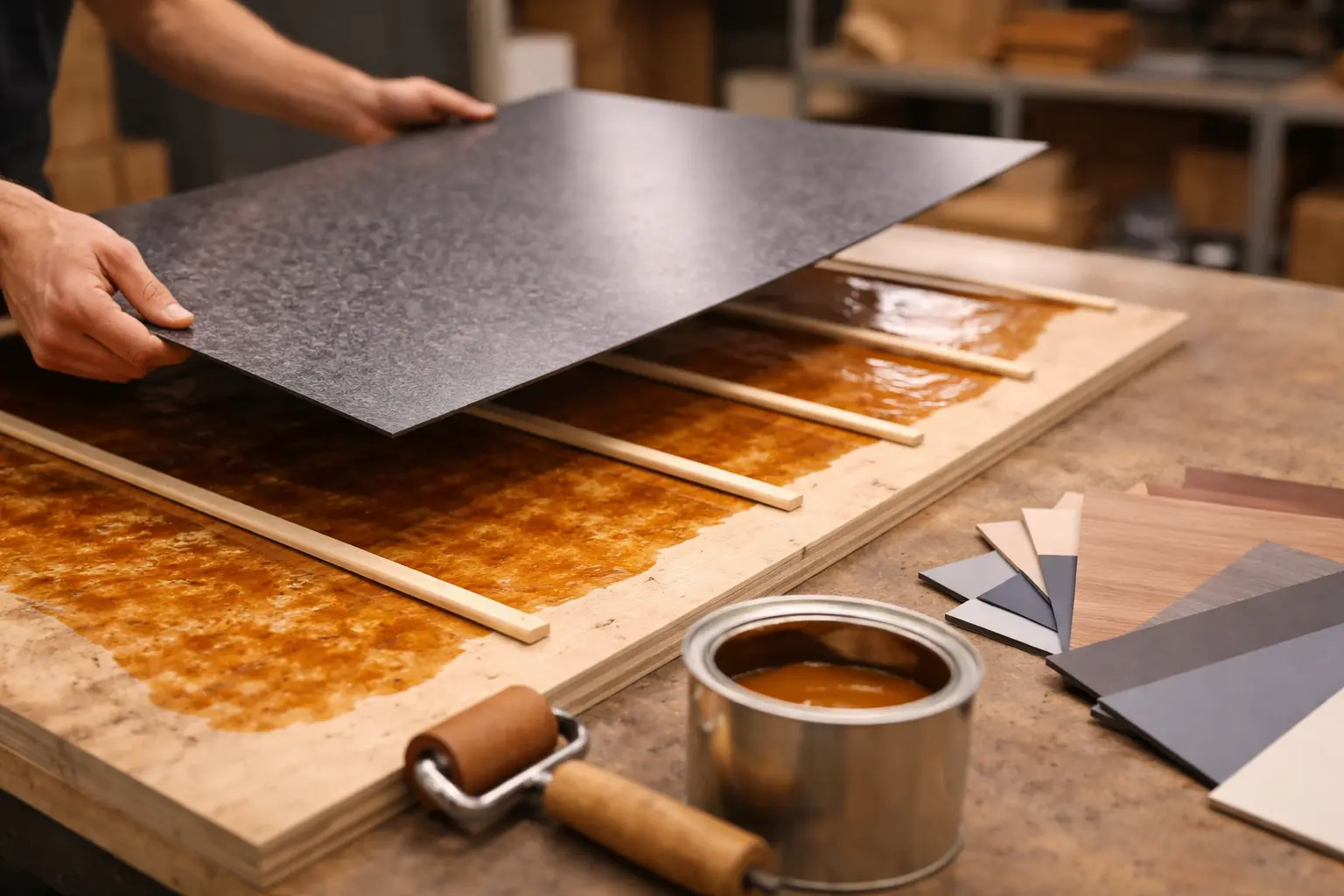
Step-by-step guide to bonding HPL laminate to substrates using contact adhesive — surface prep, application, pressing, and troubleshooting delamination.
Read More →ChinaGluePro manufactures neoprene contact adhesives rated to 120°C and silicone sealants rated to 250°C. Get technical recommendations for your application.