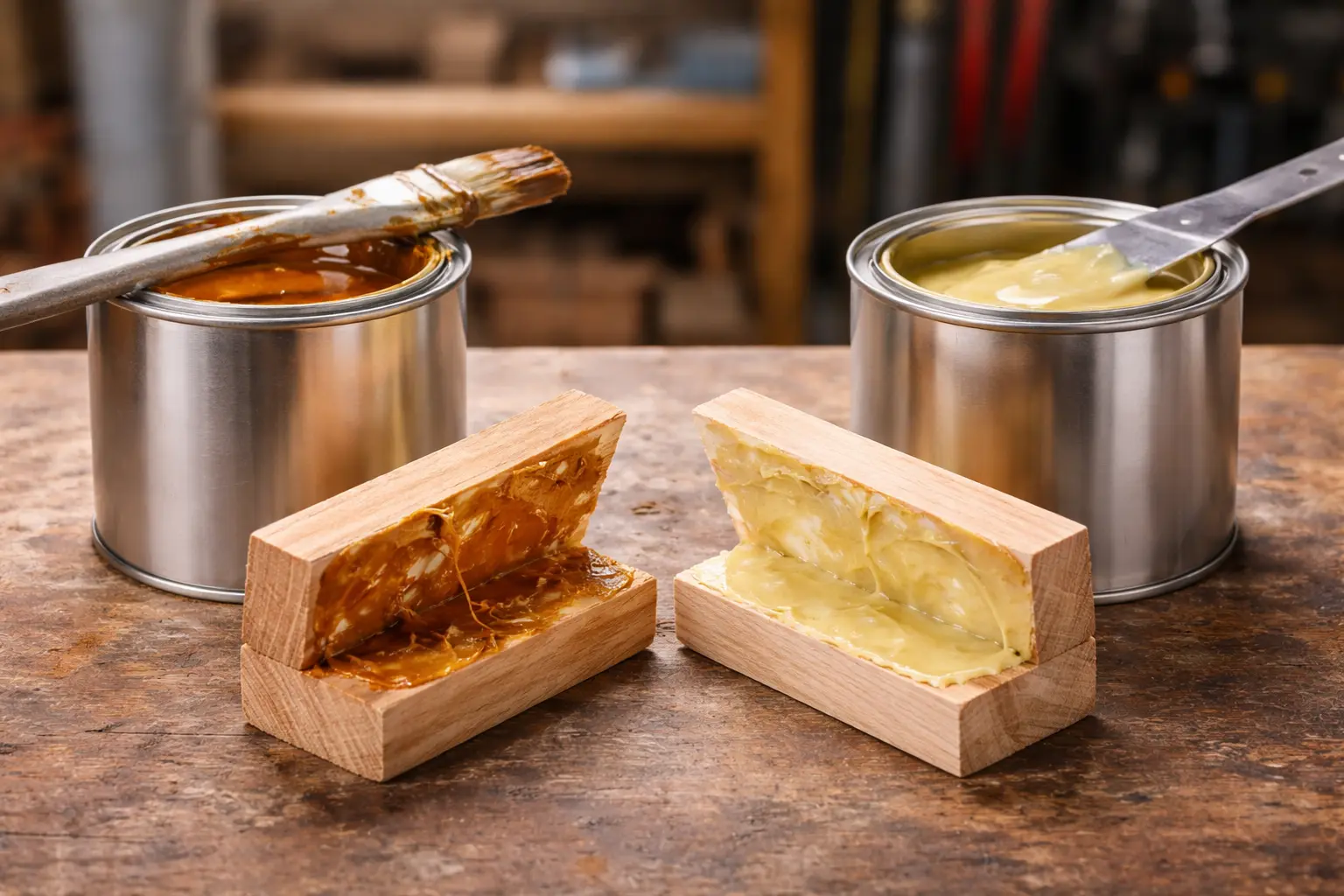
Neoprene vs SBS Contact Adhesive: Complete Comparison Guide
A detailed comparison of neoprene (CR) and SBS contact adhesives — covering bond strength, heat resistance, cost, and ideal applications for industrial buyers.
Read More →Technical Guide
High-pressure laminate (HPL) is one of the most widely used surfacing materials in furniture and countertop manufacturing. From kitchen worktops and bathroom vanities to office desks and retail fixtures, HPL provides a durable, decorative surface at a fraction of the cost of natural stone or solid wood. The key to a reliable HPL installation is the adhesive bond between the laminate sheet and the substrate — and contact adhesive is the standard bonding method used by factories worldwide.
This guide covers the complete HPL lamination process — from adhesive selection and surface preparation to pressing technique and delamination troubleshooting. Whether you operate a furniture factory producing countertops at scale or a workshop handling custom cabinetry, these best practices will help you achieve consistent, defect-free bonds that withstand heat, moisture, and daily wear.
HPL (High-Pressure Laminate) is manufactured by pressing layers of kraft paper saturated with phenolic resin under high heat and pressure (over 1000 PSI at 140-150°C). The result is a dense, non-porous sheet typically 0.6-1.2 mm thick with a melamine-impregnated decorative surface. The back side of HPL is deliberately sanded at the factory to provide a mechanical bonding surface — this sanded texture is essential for adhesive grip.
The substrate provides the structural body of the countertop or panel. Each substrate type has different porosity, which affects adhesive absorption and required coat weight:
Contact adhesive is the industry standard for HPL bonding because of three properties: instant bond upon pressing (no clamping required), flexibility to accommodate substrate movement, and heat resistance sufficient for kitchen countertop applications. Unlike PVA (white glue) or epoxy, contact adhesive bonds immediately when the two dried adhesive films meet under pressure, allowing production to continue without waiting for cure time under clamps.
Three types of contact adhesive are used for HPL lamination: neoprene (CR), SBS (styrene-butadiene-styrene), and water-based. Each has distinct performance characteristics that suit different applications and production requirements.
| Property | Neoprene (CR) | SBS | Water-Based |
|---|---|---|---|
| Heat Resistance | Up to 120°C | Up to 60-80°C | Up to 60°C |
| Bond Strength (N/mm) | 3.0-5.0 | 2.0-3.5 | 1.5-2.5 |
| Open Time (25°C) | 10-15 min | 10-20 min | 30-60 min |
| VOC Content | High (solvent-based) | High (solvent-based) | Low / near zero |
| Post-Forming Capability | Excellent | Limited | Not recommended |
| Relative Cost | Higher | Lower | Medium |
| Best For | Countertops, post-forming, high-heat areas | Vertical panels, furniture sides, budget projects | VOC-regulated markets, low-heat surfaces |
For kitchen countertops and any surface near heat sources, neoprene contact adhesive is the recommended choice due to its superior heat resistance. SBS is suitable for vertical surfaces, shelving, and furniture panels that are not exposed to high temperatures. Water-based options work well for porous-to-porous substrate bonds in markets with strict VOC regulations.
Proper surface preparation accounts for over 50% of bond success. Both the substrate and the HPL back must be clean, dry, and free of contamination before adhesive application.
Most HPL sheets come with the back already sanded from the factory. Inspect the back surface: if it appears glossy or smooth in patches, lightly sand with 120-grit sandpaper to create uniform texture. Wipe off dust with a clean, dry cloth. Do not use water or solvents on the HPL back unless contamination is present — moisture absorbed into the kraft paper layers can cause blistering after lamination.
Contact adhesive must be applied to both the substrate and the HPL back. Use a short-nap roller, notched spreader, or spray gun for even coverage. Apply in one direction to avoid air entrapment. Recommended coat weights:
Allow the adhesive to dry until it is tacky but not wet. For solvent-based neoprene or SBS adhesive, this typically takes 10-15 minutes at 25°C. For water-based adhesive, allow 30-60 minutes. Use the knuckle test: press the back of your knuckle firmly against the film. It should feel dry to a light touch but tacky under firm pressure. If adhesive transfers to your skin, wait longer.
Contact adhesive bonds on contact — there is no repositioning once the two surfaces touch. For precise alignment on large countertops, place wooden dowels or alignment sticks (6-8 mm diameter) across the substrate at 200 mm intervals. Position the HPL sheet on top of the dowels, align carefully with the substrate edges, then remove dowels one at a time starting from one end while pressing the laminate down progressively.
Immediately after contact, apply firm, uniform pressure across the entire surface using a heavy J-roller (hand pressure roller weighing 2-5 kg). Start from the center and roll outward toward all edges. This technique pushes trapped air to the edges where it can escape. Make at least 3 complete passes across the surface. Apply extra pressure along all edges — edge delamination is the most common defect in HPL countertop production.
For industrial production, powered pinch rollers delivering 0.3-0.5 MPa pressure provide the most consistent results. Vacuum bag pressing is used for curved or irregular surfaces where roller access is limited.
Post-forming is the process of bending HPL around a curved substrate edge (typically a bullnose or waterfall countertop profile) using heat. This requires specific adhesive properties and technique:
Delamination — the separation of HPL from the substrate — is the most common and costly defect in laminate manufacturing. The table below lists common causes and corrective actions:
| Symptom | Likely Cause | Corrective Action |
|---|---|---|
| Edge lifting within 24 hours | Insufficient adhesive at edges; inadequate roller pressure at perimeter | Extend adhesive coverage 5-10 mm beyond trim line; apply extra roller passes on all edges |
| Blistering in center of panel | Trapped air from uneven adhesive application or incorrect rolling direction | Roll from center outward; apply adhesive in one consistent direction; check coat uniformity |
| Delamination near heat source | Adhesive heat resistance exceeded (SBS or water-based used near oven/cooktop) | Switch to neoprene contact adhesive (heat resistant to 120°C) for all countertop applications |
| Weak bond across entire surface | Bonded before adhesive was dry (solvent trapped); contaminated substrate surface | Extend drying time; verify knuckle test; clean substrate with compressed air before coating |
| Bond failure after weeks/months | Substrate moisture too high; trapped solvent migrating through bond line over time | Check substrate moisture (must be below 12%); allow full adhesive drying; improve workshop ventilation |
| Post-form edge peeling | Laminate released before cooling below 60°C; wrong adhesive type (SBS instead of neoprene) | Hold pressure until laminate cools fully; use neoprene adhesive only for post-forming |
When investigating bond failures, peel back the delaminated laminate and examine both surfaces. If adhesive remains on the substrate (adhesive failure at the HPL interface), the HPL back was not properly prepared or the adhesive was incompatible. If the adhesive splits evenly between both surfaces (cohesive failure), the adhesive film was too thin or not fully dried before pressing. If the substrate surface tears away with the adhesive (substrate failure), the particleboard or MDF was too weak or moisture-damaged.
A detailed comparison of neoprene (CR) and SBS contact adhesives — covering bond strength, heat resistance, cost, and ideal applications for industrial buyers.
Read More →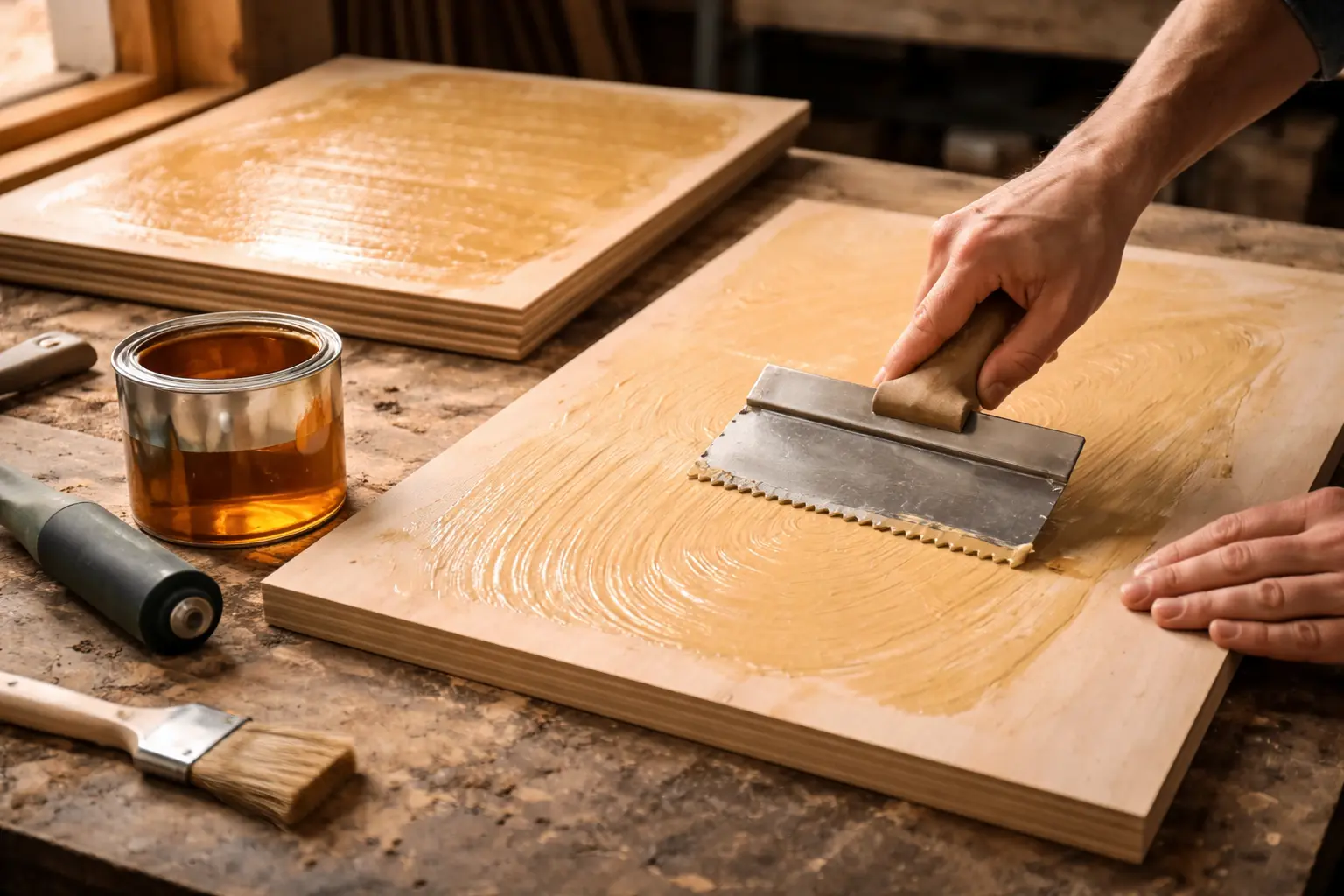
Step-by-step instructions for applying contact adhesive in industrial settings — surface preparation, application methods, drying time, and troubleshooting weak bonds.
Read More →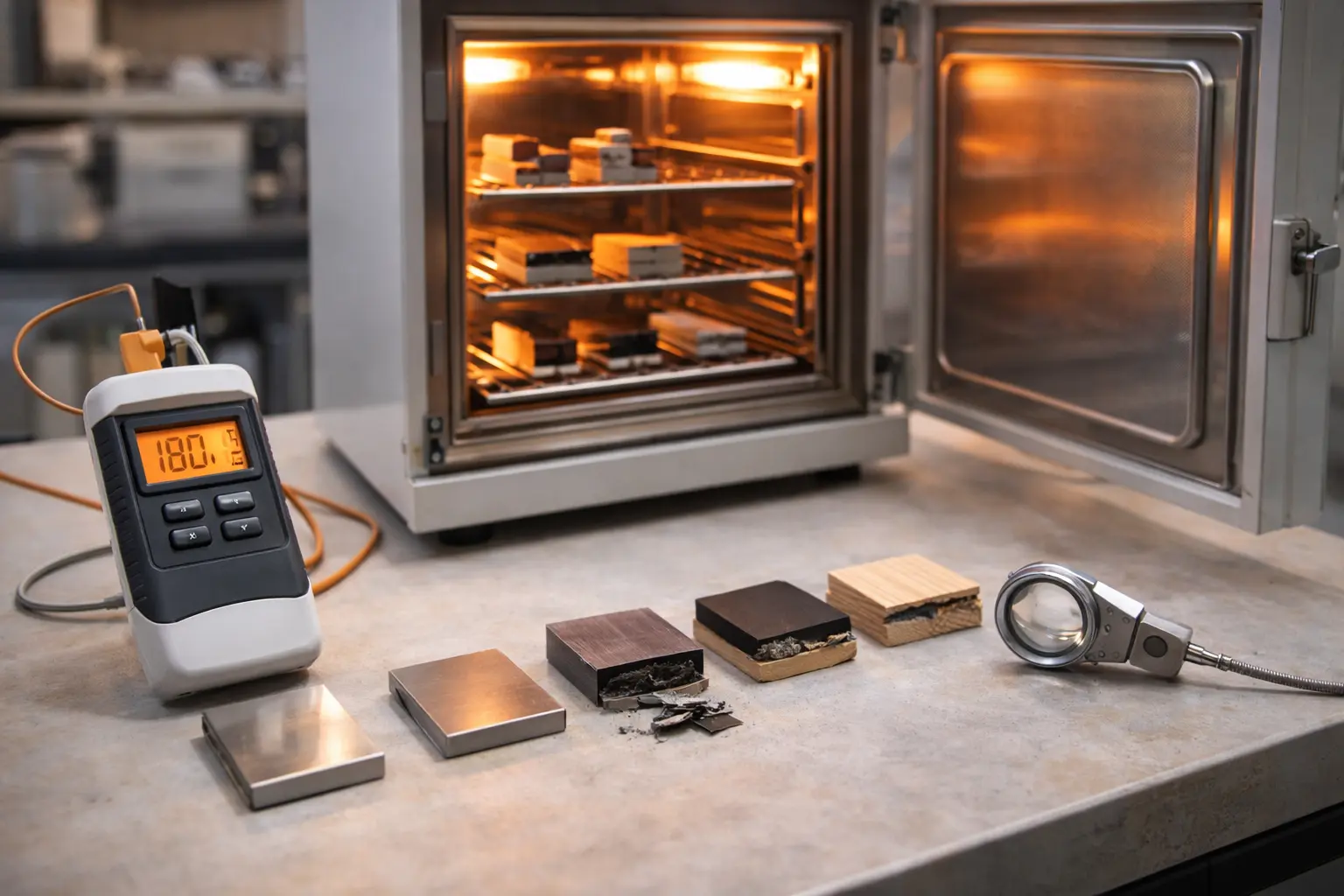
Guide to heat resistant adhesives for industrial use — temperature ratings, adhesive types, application methods, and selection criteria for high-heat environments.
Read More →ChinaGluePro supplies neoprene and SBS contact adhesives optimized for furniture and countertop lamination. Factory-direct pricing with technical support.