Neutral vs Acetoxy Silicone Sealant: Which One to Use?
|8 min read|ChinaGluePro Technical Team
Silicone sealant is one of the most widely used sealing and bonding materials in the construction industry. Whether you are sealing curtain wall joints, installing bathroom fixtures, or weatherproofing window frames, the type of silicone sealant you choose has a direct impact on long-term performance and substrate compatibility. The two main categories — neutral cure and acetoxy cure — differ fundamentally in their curing chemistry, and selecting the wrong one can lead to corrosion, adhesion failure, or premature joint degradation.
This guide explains the curing chemistry behind each type, compares their properties side by side, and provides clear recommendations for when to use neutral silicone sealant versus acetoxy silicone sealant. If you are a contractor, distributor, or procurement manager sourcing silicone sealants for construction projects, this comparison will help you make the right specification decision.
How Silicone Sealant Cures
All single-component silicone sealants cure through a process called moisture crosslinking. When the sealant is exposed to atmospheric humidity after application, the crosslinking agent reacts with water molecules in the air, creating chemical bonds between silicone polymer chains. This transforms the paste from a soft, workable state into a durable, flexible rubber.
The critical difference between neutral and acetoxy silicone lies in the crosslinking agent used — and the by-product released during curing. Acetoxy silicone uses acetic acid-based crosslinkers, while neutral silicone uses oxime or alkoxy-based crosslinkers. This seemingly small chemical distinction creates significant differences in substrate compatibility, odor, cure speed, and application suitability.
Why the Cure By-Product Matters
The by-product released during curing comes into direct contact with the substrate surface at the bond line. If that by-product is corrosive — as acetic acid is — it can attack reactive materials like metals, natural stone, concrete, and certain plastics. This is the single most important factor in choosing between neutral and acetoxy silicone sealant for any given application.
Acetoxy Silicone Sealant
Acetoxy silicone sealant — sometimes called "acid cure" silicone — releases acetic acid (CH3COOH) as its curing by-product. This is the source of the sharp vinegar-like smell that is immediately noticeable when applying acetoxy sealant. Acetoxy was the original silicone sealant chemistry and remains widely available due to its lower cost and faster cure speed.
Advantages of Acetoxy Sealant
—Fast cure speed: Acetoxy silicone forms a skin in 5-15 minutes and reaches full cure in 24-48 hours under standard conditions (23°C, 50% RH). This is approximately 30-50% faster than most neutral cure formulations.
—Strong adhesion to glass: Acetoxy sealant bonds exceptionally well to glass surfaces, making it the traditional choice for aquariums, glass display cases, and simple glass-to-glass glazing joints.
—Lower cost: Acetoxy crosslinking chemistry is simpler and uses less expensive raw materials, resulting in 15-25% lower pricing compared to equivalent neutral cure products.
—Good elasticity: Once cured, acetoxy silicone maintains good flexibility and movement accommodation, similar to neutral cure silicone.
Limitations of Acetoxy Sealant
—Corrosive to metals: Acetic acid attacks aluminum, copper, brass, zinc, galvanized steel, and lead. Acetoxy sealant must never be used in contact with these metals.
—Damages natural stone: Marble, limestone, travertine, and other calcium-based stones react with acetic acid, causing staining, etching, and bond failure over time.
—Incompatible with concrete and mortar: The alkaline nature of cementitious substrates reacts adversely with acetic acid, weakening the bond and potentially discoloring the joint.
—Strong odor: The vinegar smell during curing is unpleasant in enclosed spaces and can be an issue in occupied buildings or poorly ventilated areas.
Neutral Silicone Sealant
Neutral cure silicone sealant releases either an alcohol (methanol or ethanol) or an oxime compound during curing — both of which are non-corrosive and far less odorous than acetic acid. This makes neutral silicone compatible with virtually all building substrates, which is why it has become the standard specification for modern construction projects worldwide.
Advantages of Neutral Sealant
—Universal substrate compatibility: Safe to use on metals (aluminum, copper, galvanized steel), natural stone (marble, granite, limestone), concrete, mortar, plastics, painted surfaces, and glass. No corrosion risk.
—Low odor: Minimal smell during curing, making it suitable for interior applications in occupied buildings, hospitals, schools, and food processing facilities.
—Excellent weathering resistance: Neutral silicone performs well under UV exposure, temperature cycling, and rain — critical for exterior facade and curtain wall joints.
—Better adhesion to porous substrates: Bonds more reliably to concrete, brick, and wood compared to acetoxy sealant, which can be weakened by acid-alkali reactions on these surfaces.
Limitations of Neutral Sealant
—Slower cure speed: Skin formation takes 15-30 minutes and full cure requires 48-72 hours under standard conditions. In cold or dry climates, curing can take even longer.
—Higher cost: Raw material costs are 20-40% higher than acetoxy due to more expensive crosslinking agents. This translates to a noticeable price premium per cartridge or sausage pack.
—Slightly shorter shelf life: Some neutral cure formulations (especially oxime-based) have a shelf life of 9-12 months compared to 12-18 months for acetoxy products. Proper storage in cool, dry conditions is essential.
Head-to-Head Comparison: Neutral vs Acetoxy
The following table summarizes the key differences between neutral and acetoxy silicone sealants across the parameters that matter most to construction professionals and distributors.
Property
Neutral Cure
Acetoxy Cure
Cure By-Product
Alcohol or oxime (non-corrosive)
Acetic acid (corrosive)
Odor
Mild / low odor
Strong vinegar smell
Cure Speed (Skin Time)
15 - 30 minutes
5 - 15 minutes
Full Cure
48 - 72 hours
24 - 48 hours
Metal Compatibility
Safe for all metals
Corrosive to most metals
Stone / Marble
Safe — no staining or etching
Causes staining and etching
Concrete / Mortar
Good adhesion
Poor — acid-alkali reaction
Glass Adhesion
Good
Excellent
Cost (per unit)
Higher (20-40% premium)
Lower (baseline)
Shelf Life
9 - 12 months
12 - 18 months
Adhesion Range
Universal — all common substrates
Limited — glass, ceramic, some plastics
UV Resistance
Excellent
Good
The comparison makes clear that neutral silicone sealant is the safer, more versatile option for most construction applications. Acetoxy sealant has a narrower — but valid — set of use cases where its faster cure and lower cost provide real advantages.
When to Choose Acetoxy Silicone Sealant
Despite its substrate limitations, acetoxy silicone remains the right choice in specific applications where corrosion is not a concern and fast cure time matters:
—Glass-to-glass bonding: Aquariums, glass shelving, display cabinets, and glass partitions. Acetoxy provides the strongest adhesion to glass of any silicone type.
—Glass-to-ceramic joints: Simple bathroom mirror installations where the mirror is mounted on ceramic tile with no metal clips or brackets in contact with the sealant.
—Budget-sensitive projects on non-reactive substrates: When the project involves only glass, glazed ceramic, or non-reactive plastic substrates and cost optimization is a priority.
—High-speed production environments: Factory assembly lines for glass products where the faster skin time (5-15 minutes) reduces handling wait times and improves throughput.
When to Choose Neutral Silicone Sealant
For the majority of construction applications, neutral cure silicone sealant is the recommended specification. Its universal compatibility eliminates the risk of substrate damage and reduces on-site decision-making errors. Use neutral silicone for:
—Curtain wall and structural glazing: Aluminum frame joints, glass-to-aluminum seals, and mullion connections. Metal corrosion is unacceptable in curtain wall systems — neutral is mandatory.
—Bathroom and kitchen installations: Sealing around metal fixtures, taps, shower enclosures, and countertop edges. Anti-mold formulations are available specifically for wet-area use.
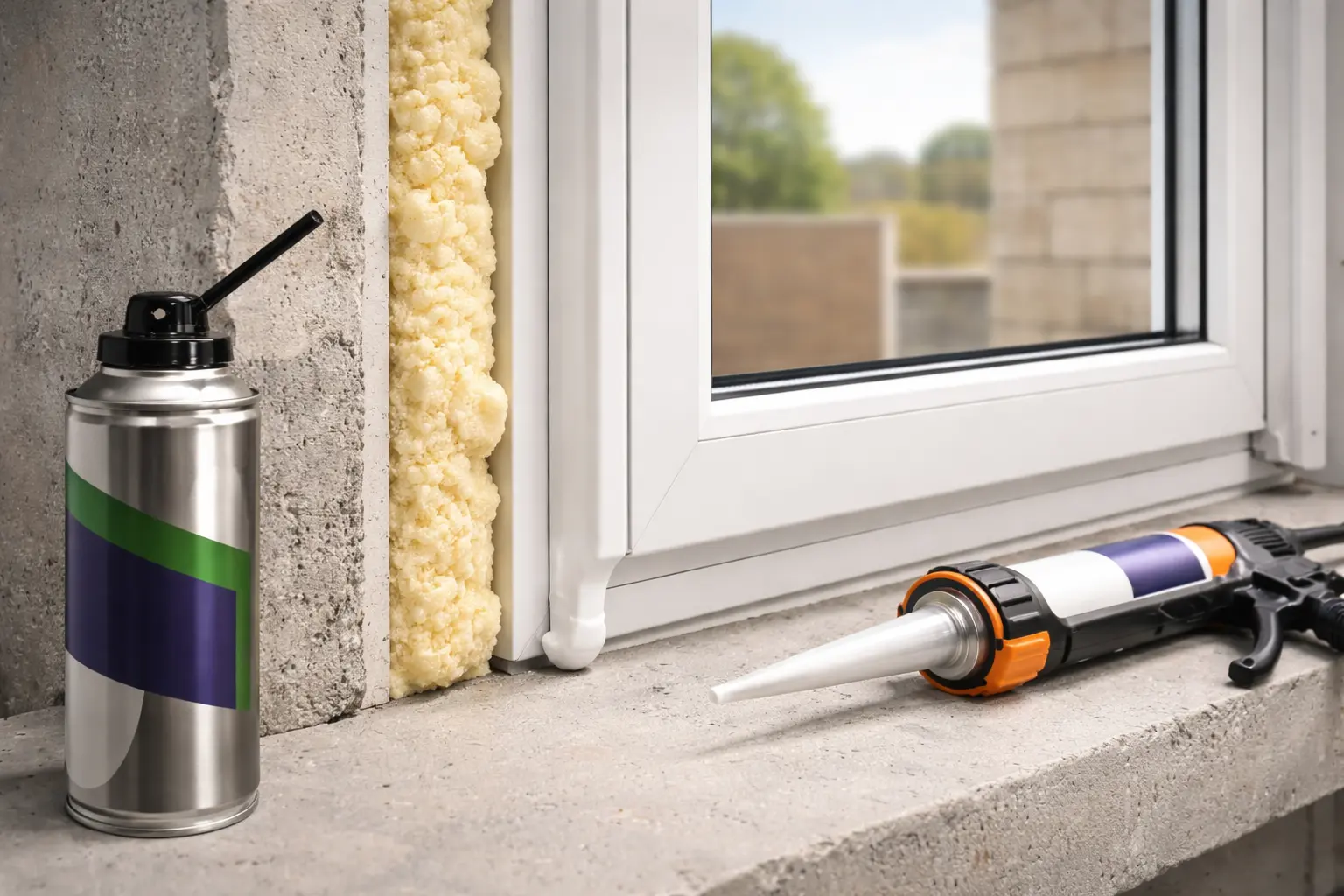
—Window and door frame sealing: Perimeter seals between aluminum or PVC window frames and concrete or masonry openings. Both the metal frame and the cementitious surround require neutral cure.
—Natural stone applications: Marble, granite, limestone, and travertine installations in facades, countertops, and flooring joints. Acetoxy would cause permanent staining.
—General construction sealing: Expansion joints, perimeter seals, HVAC duct sealing, and any application involving mixed substrates where you cannot guarantee all surfaces are non-reactive.
Regional Market Preferences
Market preferences for neutral versus acetoxy silicone sealant vary significantly by region, driven by local construction practices, building codes, climate conditions, and price sensitivity. Understanding these preferences is important for distributors and contractors sourcing sealant products.
—Middle East and North Africa: Neutral silicone dominates due to extensive aluminum curtain wall construction and high-end marble/stone finishing. Certification requirements (SASO, GSO) often mandate neutral cure for structural joints.
—Southeast Asia: Mixed market — acetoxy is common for budget residential projects, while neutral is specified for commercial high-rises and government buildings. Tropical humidity accelerates curing for both types.
—Sub-Saharan Africa: Acetoxy sealant holds a larger market share due to lower pricing and widespread availability. However, neutral cure adoption is growing as construction standards evolve and more aluminum-frame buildings are constructed.
—Latin America: Both types are commonly used. Major projects specify neutral cure, while residential and small-scale commercial projects frequently use acetoxy to manage costs.
Regardless of region, the global trend is toward increased neutral silicone sealant adoption as building codes tighten and construction projects use more diverse substrate combinations. Distributors stocking both types — with a larger allocation toward neutral — are well-positioned to serve the full range of local demand.
Frequently Asked Questions
What is the difference between neutral and acetoxy silicone sealant?
The key difference is the curing by-product. Acetoxy silicone releases acetic acid (vinegar smell) during curing, which can corrode metals, marble, and concrete. Neutral silicone releases alcohol or oxime — non-corrosive and safe for all substrates. Neutral costs more but is compatible with a wider range of materials.
Can I use acetoxy sealant on metal?
Not recommended. The acetic acid released during curing corrodes most metals including aluminum, copper, zinc, and galvanized steel. Use neutral cure silicone for any metal contact application. Stainless steel is the only metal type that tolerates acetoxy sealant, but neutral is still preferred.
Which silicone sealant is better for bathrooms?
Neutral silicone sealant is preferred for bathrooms. It bonds well to tiles, glass, ceramic, and metal fixtures without corrosion risk. Look for formulations with anti-fungal/anti-mold additives specifically designed for wet areas. Acetoxy can be used on glass-to-glass joints but should be avoided near metal fittings.
Why is neutral silicone sealant more expensive than acetoxy?
Neutral silicone uses more expensive crosslinking agents (oxime or alkoxy-based) compared to the simpler acetoxy chemistry. Raw material costs are 20-40% higher. However, neutral sealant has broader substrate compatibility, lower warranty claims, and reduced corrosion risk — making it more cost-effective overall for most construction applications.
Understand the differences between PU foam and silicone sealant — gap filling, waterproofing, insulation, and the right product for each construction application.
Guide to heat resistant adhesives for industrial use — temperature ratings, adhesive types, application methods, and selection criteria for high-heat environments.
A practical guide to REACH compliance for adhesive importers — what the regulation covers, how to verify supplier compliance, and which documents to request.