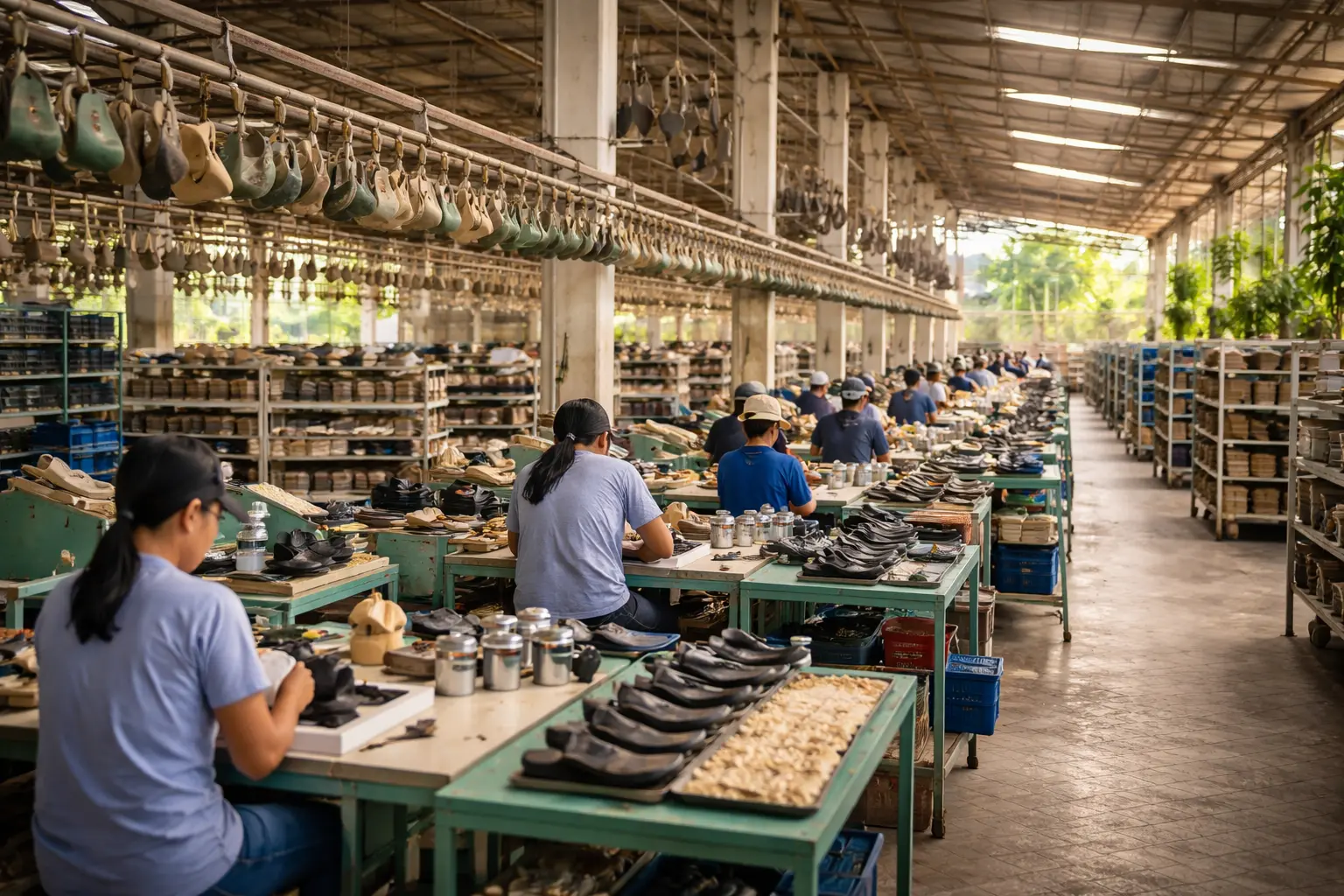
Adhesive Solutions for Southeast Asian Footwear Factories
How Southeast Asian footwear factories can source adhesives from China — product selection, climate considerations, logistics, and supply chain optimization.
Read More →Sourcing Guide
Africa is one of the fastest-growing markets for industrial adhesives. Rapid urbanization, expanding manufacturing sectors, and large-scale infrastructure projects across the continent are driving demand for reliable bonding solutions. Contact adhesive, in particular, has become a staple product in African furniture factories, construction sites, and footwear workshops — from Lagos to Nairobi, Dar es Salaam to Accra.
China is the world's largest producer and exporter of contact adhesive, offering a combination of competitive pricing, diverse product range, and established export infrastructure that few other manufacturing regions can match. For African importers, distributors, and factory owners looking to source contact adhesive from China, the opportunity is significant — but so are the potential pitfalls if you choose the wrong supplier or product specification.
This guide covers everything an African buyer needs to know: how to evaluate Chinese adhesive manufacturers, which products perform best in African market conditions, shipping logistics, import regulations, payment terms, and how to build a sustainable supplier relationship.
The African adhesive market is shaped by three dominant industries, each with distinct product requirements and purchasing patterns.
Furniture manufacturing is the single largest consumer of contact adhesive across Africa. Factories in Nigeria, Kenya, Tanzania, Ethiopia, and Ghana use contact adhesive daily for HPL lamination, veneer bonding, foam-to-frame assembly, and edgebanding. SBS-based contact adhesives dominate this segment due to their lower cost per kilogram, which aligns with the price-sensitive nature of the African furniture market. Annual consumption at a medium-sized furniture workshop ranges from 5 to 20 tons of adhesive.
Africa's construction boom — particularly in East and West Africa — has increased demand for adhesives used in flooring installation, wall panel bonding, insulation attachment, and tile fixing. Contact adhesive is used for bonding rubber flooring, PVC sheets, and decorative panels. This segment increasingly demands adhesives that perform well in high-humidity and high-temperature environments common across tropical Africa.
Footwear production is growing in Ethiopia, Kenya, Nigeria, and Tanzania, supported by government industrial policies and access to raw leather. Shoe factories require neoprene-based contact adhesive for sole bonding — the heat resistance (up to 120 degrees C) is critical because shoes in African markets are frequently exposed to extreme ground temperatures. The footwear segment demands higher-grade adhesive than furniture, but in smaller volumes per factory.
Not all adhesive manufacturers in China are equal. The difference between a reliable long-term partner and a problematic supplier often comes down to a few verifiable factors.
Choosing the right product formulation is critical for market success. The two main contact adhesive types each serve different market segments in Africa.
Neoprene (CR) contact adhesive offers superior heat resistance and bond durability, making it the preferred choice for footwear bonding, automotive trim, and applications where the bonded joint faces temperatures above 60 degrees C. In tropical African climates where ground and surface temperatures can exceed 70 degrees C, neoprene provides a necessary safety margin.
SBS contact adhesive costs 20-40% less per kilogram and dries faster, making it the volume leader in African furniture and general construction markets. For indoor applications where heat exposure is limited, SBS provides adequate performance at a significantly lower cost — an important factor in price-sensitive African markets.
African markets have strong preferences for specific packaging formats that differ from other regions. Small tins (250ml, 500ml, 1L) are popular for retail hardware shops and small workshops. Medium tins (3L, 5L) serve medium-sized factories and professional contractors. Drums (20L, 200L) are used by large furniture factories and construction companies. The most commercially successful format across West and East Africa is the 3L and 5L tin with a distinctive branded label — this is the packaging format most African end-users recognize and trust.
Understanding shipping logistics is essential for controlling landed cost and delivery timelines. Guangzhou is the primary shipping port for adhesive exports from South China, with excellent access to container terminals and competitive freight rates to African destinations.
| African Region | Key Ports | Transit Time (Sea) |
|---|---|---|
| East Africa | Mombasa, Dar es Salaam, Djibouti | 20 - 25 days |
| West Africa | Lagos, Tema, Abidjan, Douala | 30 - 40 days |
| Southern Africa | Durban, Maputo, Beira | 25 - 30 days |
| North Africa | Casablanca, Alexandria, Tunis | 25 - 35 days |
For adhesive imports, full container load (FCL) is almost always more cost-effective than less-than-container-load (LCL). A standard 20ft container holds approximately 18-20 tons of adhesive in drums, or 16-18 tons in canned format (due to packing density). For first-time buyers who cannot fill a full container, LCL is available but adds 30-50% to per-ton freight cost and extends transit time by 5-10 days due to consolidation handling.
Solvent-based contact adhesive is classified as UN 1133 (Adhesives, flammable) under IMDG Code, Class 3 dangerous goods. This classification affects shipping cost (DG surcharge typically USD 200-500 per container), documentation requirements (SDS, DG declaration), and port handling procedures. Work with a freight forwarder experienced in hazardous goods shipments to avoid delays or rejected bookings.
Import requirements vary significantly across African countries. The following table summarizes key certification requirements for the largest adhesive markets.
| Country | Standards Body | Key Requirements |
|---|---|---|
| Nigeria | SON / SONCAP | SONCAP certificate, product test report, SDS |
| Kenya | KEBS | PVOC (Pre-Export Verification of Conformity), CoC |
| Tanzania | TBS / TFDA | TBS certification, product registration, SDS |
| Ghana | GSA | Destination inspection, SDS, test report |
| Ethiopia | ESA | Conformity assessment, product certificate |
| South Africa | SABS / NRCS | SDS, hazardous substance registration (if applicable) |
In all cases, a complete Safety Data Sheet (SDS) in English is mandatory. For Francophone African countries (Ivory Coast, Cameroon, Senegal, DRC), labels and documentation should be provided in French. For Lusophone markets (Mozambique, Angola), Portuguese documentation is expected. An experienced Chinese adhesive manufacturer will prepare all required documentation as part of the export process.
Securing fair and safe payment terms is a common concern for African importers buying from China. Several proven mechanisms protect both buyer and seller.
The most successful adhesive importers in Africa treat their Chinese supplier as a strategic partner, not just a vendor. Building a strong relationship reduces risk, improves pricing over time, and ensures consistent product quality.
For buyers interested in building their own adhesive brand in the African market, ChinaGluePro offers comprehensive OEM/ODM manufacturing and private label services. From formulation development to custom packaging design with multilingual labels, the entire process is managed in-house at our Guangzhou factory.
How Southeast Asian footwear factories can source adhesives from China — product selection, climate considerations, logistics, and supply chain optimization.
Read More →
What to look for in an adhesive distribution partner — evaluation criteria, partnership models, inventory management, and building a profitable adhesive business.
Read More →
A detailed comparison of neoprene (CR) and SBS contact adhesives — covering bond strength, heat resistance, cost, and ideal applications for industrial buyers.
Read More →ChinaGluePro has been supplying contact adhesive to African markets for over 10 years. Get competitive pricing with full export documentation and private label service.